
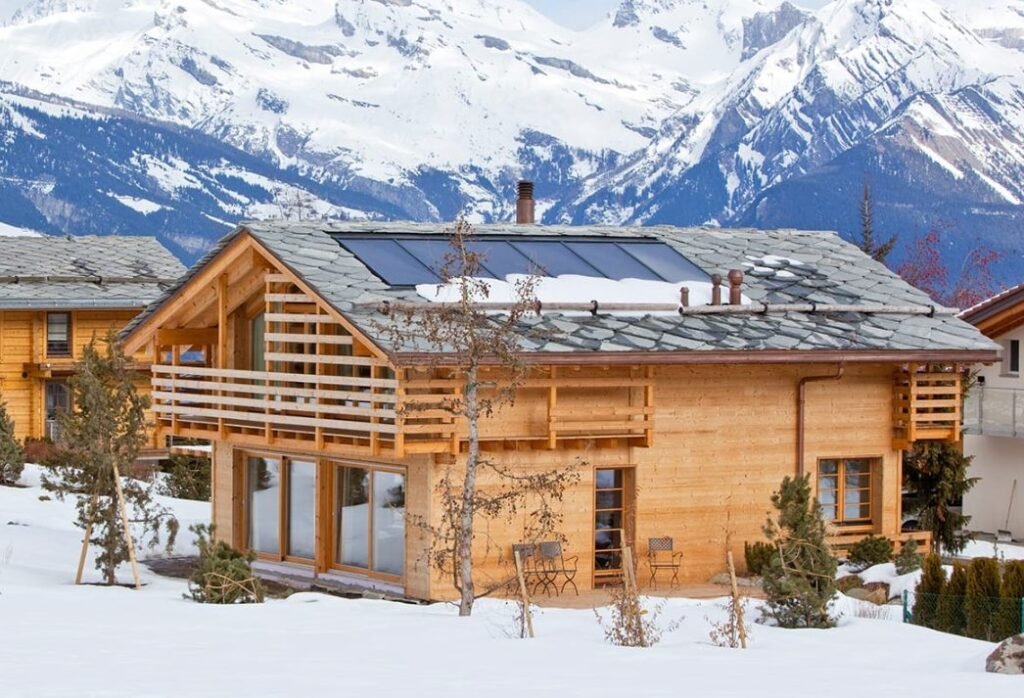
The striking mountain views at alpine ski resorts often come from the familiar look of natural wood buildings. Yet at high elevations, where nights drop below freezing and days bring strong sunlight, real timber creates problems. It warps, rots, and needs frequent repairs. ALumverde offers a different path with hybrid aluminum-resin composites. These materials keep the natural character of wood while adding the lasting strength of metal.
The Alpine Challenge: Why Real Wood Fails in High-Altitude Lodges
Harsh weather in mountain areas causes repeated expansion and contraction. This cycle damages ordinary building materials over time.
The Warping and Cracking Dilemma
Ski lodges deal with heavy snow and water from melting that affects traditional wood.
- Natural timber takes in moisture during snowmelt, which leads to rot inside and weakens the structure.
- The repeated freeze-thaw cycle at high altitudes makes wood fibers swell and shrink, resulting in lasting bends that spoil clean architectural lines.
- Cracks and splits appear and create safety issues on guest balconies and walkways.
Fire Safety Regulations in Commercial Retreats
Ski lodges host many people and sit in remote spots, so fire resistance matters most for building approvals.
- Traditional wood and common WPC materials burn easily and often fall short of current safety codes for larger structures.
- Commercial lodges need materials that block flames instead of feeding them.
- Rules on smoke output have grown stricter to keep escape routes clear during emergencies.
ALumverde Engineering: The Science of Zero-Warp Stability
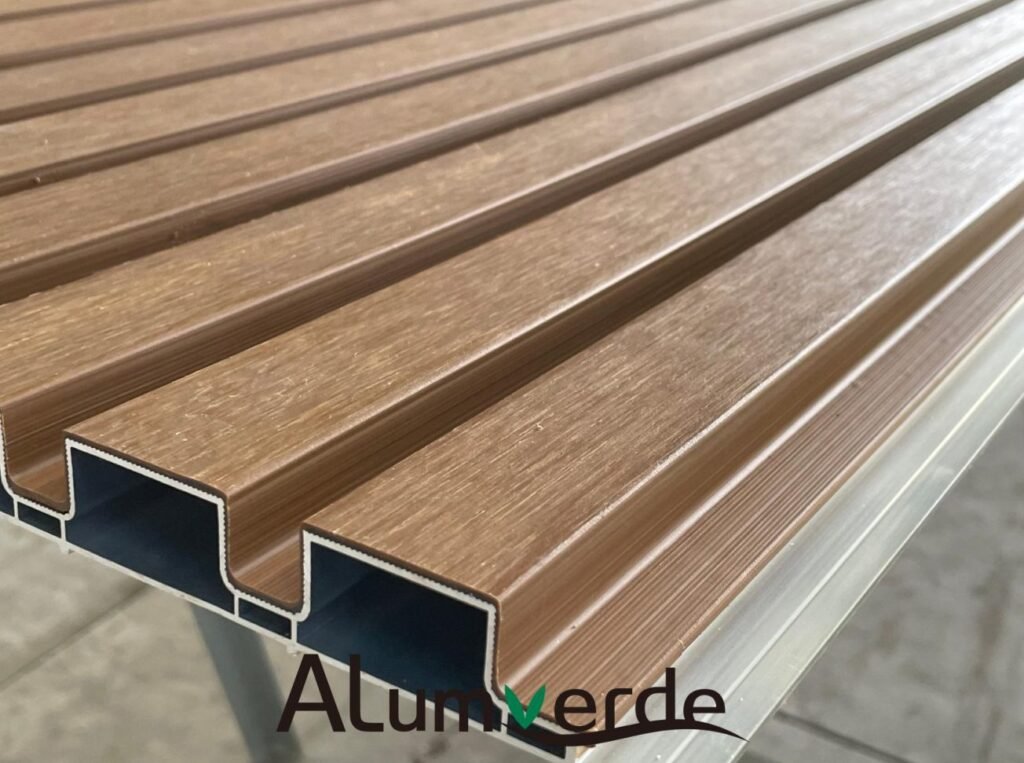
ALumverde co-extrusion aluminum products replace the sensitive core of ordinary panels with reliable 6063-T5 aluminum to handle these conditions.
The Hybrid Structural Advantage
A Surlyn resin layer bonds with the aluminum core. This creates material that stays stable through tough mountain winters.
- The 6063-T5 aluminum core delivers consistent strength and keeps profiles from bending or cracking for years.
- Products show very low expansion rates, so a 6-meter length remains straight even with big temperature swings.
- The material weighs half as much as traditional wood-plastic composites, which means lighter support needs in hard-to-reach alpine locations.
Surlyn Resin: The “Golf Ball” Shield
Surlyn resin, known from golf ball covers, forms a tough co-extrusion layer that resists damage.
- This protective layer blocks 99% of UV rays and stops the graying or fading seen in regular mountain timber.
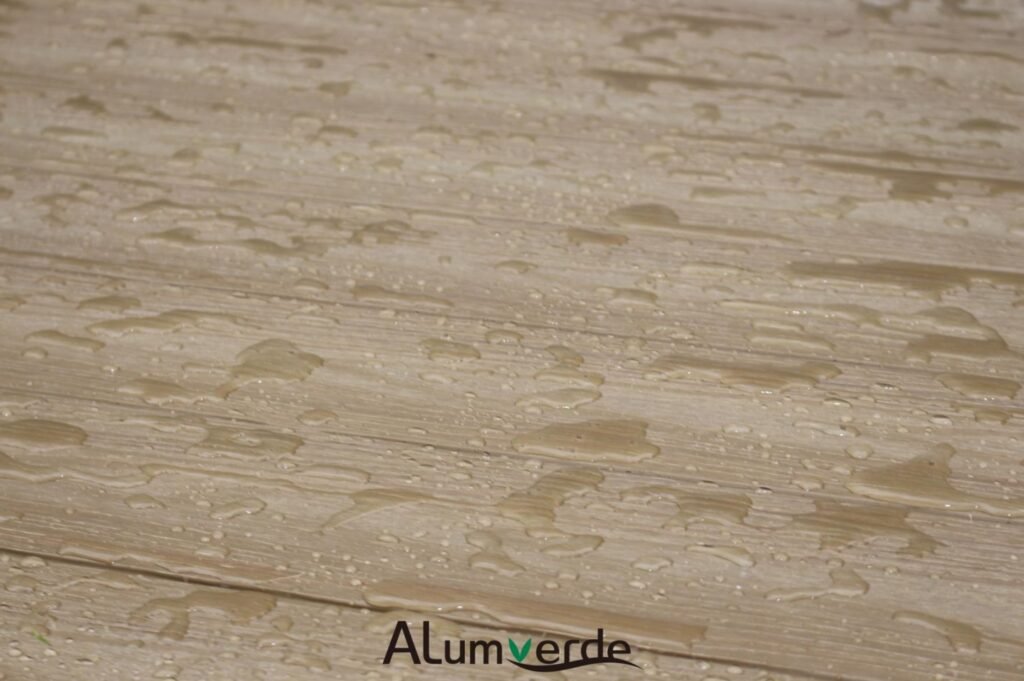
- The surface absorbs no water, so melting ice and snow cannot get inside and cause harm.
- The co-extrusion process builds a 3D grain that stands up better to scratches and heavy foot traffic in busy resort spots.
Practical Application: From Balconies to Facades
ALumverde co-extrusion aluminum products target areas where standard materials usually fall short.
LuxeFlow Decking: Managing Snowmelt and Drainage
Balconies at ski lodges must deal with large volumes of water in spring, so good drainage becomes essential.
- The Co-Extrusion Aluminum LuxeFlow Decking system includes built-in channels that collect surface water and direct it to proper outlets.
- It holds a Class A fire rating, which helps high-rise resort balconies meet safety rules.
- The textured finish offers strong slip resistance, important for safety when surfaces turn wet or icy.
Cladding and Tube Systems for Resilient Facades
Co-Extrusion Aluminum Cladding and Tube options let designers build detailed vertical patterns and strong shapes that last.
- Co-Extrusion Aluminum Shiplap and Slat Cladding use a double-structure build for better stability on exposed high-altitude walls.
- Heat insulation keeps surfaces up to 30% cooler than standard aluminum and lowers the overall thermal load on the building.
- ALumverde Co-Extrusion Aluminum Tubes work for wind-resistant fences, pergolas, and screening that keep their appearance for many years.
Reimagining Alpine Aesthetics Without the Maintenance
Architects no longer need to pick between a cozy lodge look and long-term performance.
Authentic 3D Wood Grain Textures
The finishing process copies natural ridges, soft shadows, and varied tones of real timber. It avoids the cold metallic feel of plain aluminum.
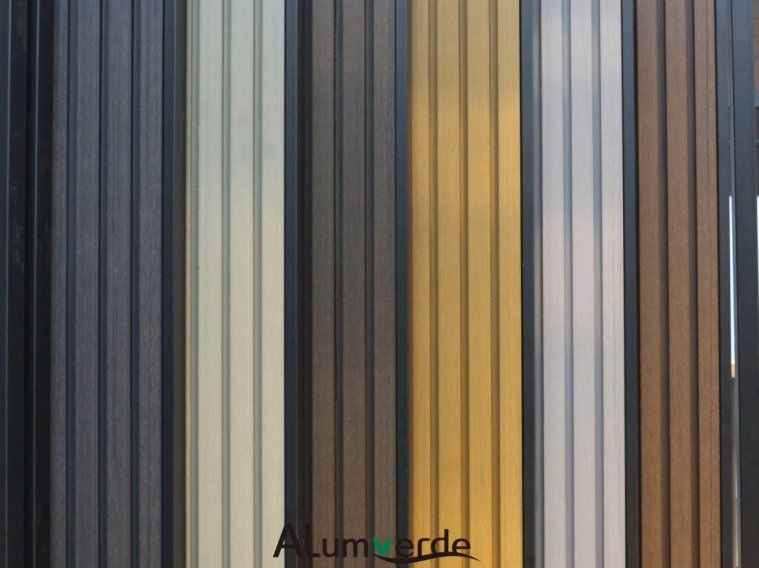
- Colors draw from nature, such as Walnut, Teak, IPE, and Antique, to fit forest surroundings.
- Three surface options—Brush, Wood Grain, and Woodweave—give different grip levels and tactile qualities.
- The 3D pattern creates a warm feel for guests, unlike flat powder-coated metal.
Customized Solutions for Unique Architectural Visions
High-end ski lodges need special details, so flexible production supports each project.
- Lengths reach up to 6 meters to reduce joints and waste on wide facades.
- Color matching helps new sections blend with existing parts of the building.
- Texture choices can match particular design goals for walls or soffits.
Elevate your next project with ALumverde. Stop struggling with the weather and build for the long term. Reach out to the engineering team for a tailored discussion and see how aluminum strength pairs with natural warmth.
FAQ
Q: Why is aluminum core better than wood-plastic composite (WPC) for cold climates?
A: Aluminum cores stay stable and do not expand or contract the way wood fibers do. This prevents structural problems during extreme temperature changes.
Q: How does the “30% cooler” heat insulation benefit building efficiency?
A: Less heat passes through the exterior. The profiles help keep indoor temperatures steadier and can lower costs for heating and cooling.
Q: Are these materials truly fireproof for commercial hotel use?
A: Yes. They meet ASTM E84 Class A standards, the top fire safety level, which makes them suitable for public buildings and taller structures.
Q: Can these composites be installed as easily as real wood?
A: They often install more easily. The material weighs half as much as WPC and uses modular hidden-clip parts, which can reduce labor costs by up to 40%.