
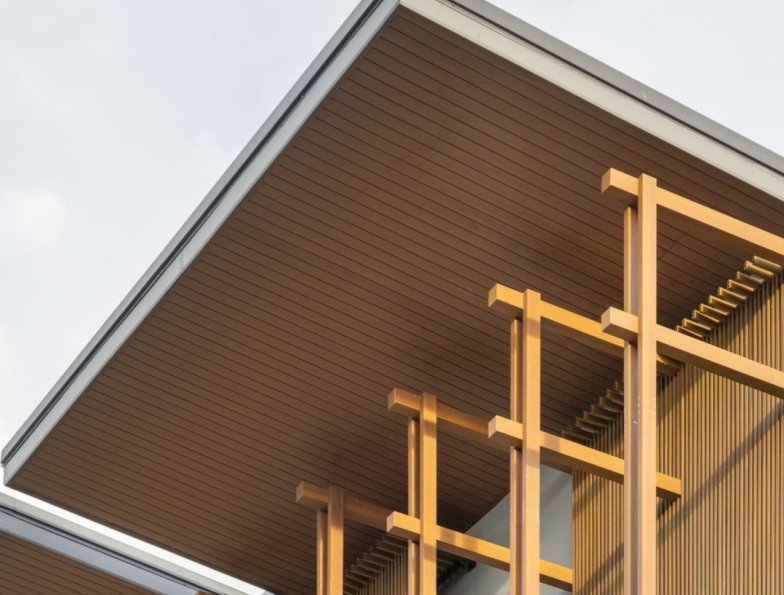
In modern commercial architecture, engineering teams often face a conflicting challenge: how to minimize the structural weight load of building facades without compromising their wind resistance and environmental safety. Traditional composite panels and solid heavy stone materials often force a costly trade-off between structural stability and installation efficiency. As an industry-leading provider of high-performance architectural systems, ALumverde has re-engineered this paradigm. By specializing in the engineering and manufacture of advanced co-extrusion aluminum exterior cladding, hollow tubes, and architectural decking systems, ALumverde introduces a technical breakthrough. Through precision double-structure design, architectural projects can now achieve robust facade integrity while drastically reducing overall structural weight.
Understanding the Double-Structure Engineering Paradigm
The balance of light mass and high rigidity is accomplished by splitting the facade system into two functional sub-structures that operate in unison.
The Mechanics of Load Separation
This structural methodology separates the aesthetic exterior layer from the core load-bearing engineering skeleton.
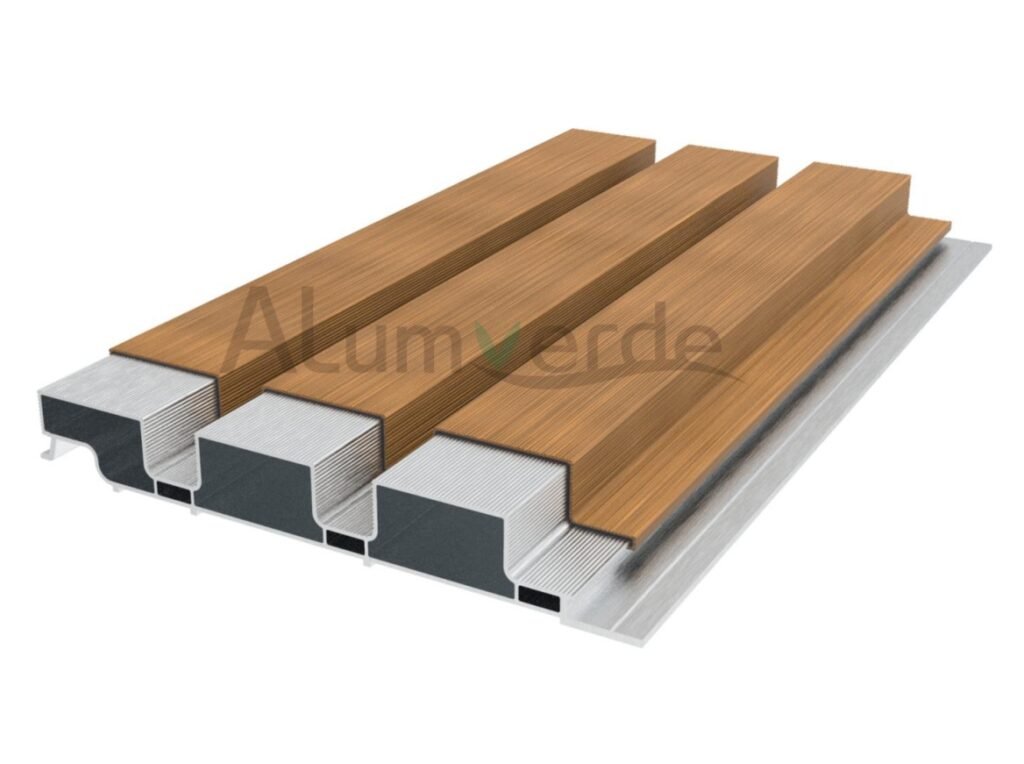
- Extruded Aluminum Core Matrix: The inner foundation relies on high-tensile structural aluminum alloys, engineered with internal geometric web reinforcement that optimizes the moment of inertia while utilizing minimal material volume.
- Surlyn Resin Co-Extrusion Shield: The outer surface features a high-density polymer protective layer that handles direct environmental hazards, ensuring that the inner structural profile remains completely unaffected by physical stress and atmospheric corrosion.
Overcoming the Structural Dead Load Dilemma
Traditional solid cladding options introduce massive static loads that require heavy, expensive building foundations and iron sub-frames.
- 50% Mass Reduction: By employing a hollow, multi-cavity aluminum architecture, this double-structure engineering approach reduces the co-extrusion aluminum cladding dead weight by half compared to conventional wood-plastic composites or solid metallic profiles.
- Extended Structural Span Capability: Because the co-extrusion aluminum cladding itself is exceptionally light, the underlying structural joists can be safely spaced up to twice the width of standard installations, significantly cutting down on structural raw material costs.
Technical Execution and Advanced Material Integration
The longevity and field performance of modern co-extrusion aluminum exterior cladding systems depend heavily on the advanced manufacturing processes used during material extrusion.
The Science of Advanced Co-Extrusion Layers
ALumverde implements a specialized co-extrusion technology that chemically links the structural base with its protective exterior.
- Golf-Ball Surface Resilience: The exterior shield uses premium Surlyn resin—the identical material utilized in professional golf balls to withstand high-velocity impact—providing outstanding surface hardness and abrasion resistance.
- Thermal Isolation Properties: Engineered with an integrated air-cavity system, this co-extrusion aluminum outer cladding profile blocks up to 30% more environmental heat transfer than basic single-layer metal panels, lowering seasonal HVAC load demands.
Customized Structural Adaptability for Engineering Projects
Every commercial development presents unique structural constraints and geometric requirements that cannot be met with off-the-shelf catalog dimensions.
- Precise customized Profile Engineering: ALumverde provides comprehensive customized solutions, allowing engineering teams to specify exact panel lengths up to 6 meters to match specific structural grids and eliminate on-site material cutting.
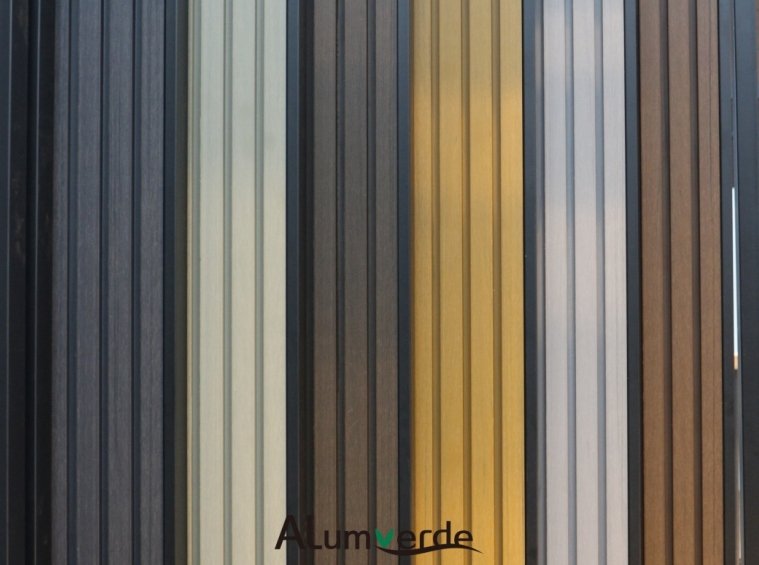
- Tailored customized Visual Aesthetics: To accommodate strict zoning laws or historical preservation briefs, our customized finish formulations recreate authentic 3D wood grain textures and diverse color palettes, avoiding the clinical look of raw sheet metal.
Tailored Solutions for Diverse Architectural Scenarios
Double-structure design shows its worth when it handles tough site problems in harsh settings.
Coastal Renovations and High-Humidity Environments
Buildings by the sea face constant salt spray and changing humidity. These conditions soon damage wood and painted steel.
- Impenetrable Moisture Defenses: The seamless Surlyn outer co-extrusion layer creates a solid barrier. Salt water stays out, so peeling, cracking, and rust do not occur.
- Long-Term Color Fastness: UV-stabilizers built into the protective layer block strong sun. Color holds steady across the surface, and owners skip frequent painting or sealing.
High-Rise Commercial Facades and Wind-Load Compliance
Tall commercial buildings face strong wind forces and strict fire rules. These rules keep out many composite materials.
- Zero Deformation Across 6-Meter Spans: The aluminum core absorbs almost no water and expands little when heated. This keeps long co-extrusion aluminum cladding pieces straight for years without warping, buckling, or cracking.
- Superior Certified Fireproof Rating: Non-combustible aluminum serves as the core. The whole envelope then meets strict fire ratings for busy public areas, homes, and offices.
Optimized Installation and Long-Term Operational Economics
Reducing material weight transforms the dynamics of field assembly, labor coordination, and building lifecycle management.
Clip-Hidden Installation Infrastructure
The structural profiles are engineered to work with intelligent fixing mechanisms that eliminate visible fastening screws.
- Rapid Snap-Lock Attachment: Lightweight panels allow installation crews to secure long sections efficiently using pre-drilled hidden clips, which accelerates the project completion timeline.
- Accommodating Structural Movement: The hidden clip configuration permits natural thermal expansion and contraction without generating noise or causing internal structural stress within the facade system.
Sustainable Structural Lifecycle Savings
Lightweight architectural envelopes deliver compounding financial returns from the initial structural design phase through decades of occupancy.
- Lower Shipping and Rigging Costs: Decreased component weight allows more square meters to be shipped per container and eliminates the need for heavy cranes during installation on site.
- Zero Chemical Maintenance Requirements: Because the outer protective shield is naturally resistant to organic growth and dirt accumulation, the building facade requires only simple water washing, saving significant structural maintenance costs over time.
Elevate Your Project with ALumverde
Are you ready to optimize your next commercial development with high-performance co-extrusion aluminum exterior wall cladding systems? Contact ALumverde today to receive detailed technical datasheets, order customized co-extrusion aluminum product samples, or get a comprehensive structural estimate tailored to your project.
FAQ
Q: How does co-extrusion aluminum wall cladding compare to standard wood-plastic composite profiles regarding structural longevity?
A: The aluminum core prevents structural warping, cracking, and moisture absorption over long spans, while standard wood-plastic options remain vulnerable to thermal expansion, heavy structural sagging, and environmental degradation.
Q: Can lightweight architectural cladding profiles achieve the necessary fire ratings for high-rise commercial structures?
A: Yes, by utilizing structural aluminum profiles as the primary core matrix, these advanced co-extrusion aluminum cladding assemblies provide an exceptionally high fireproofrate that complies with strict high-rise safety and building code mandates globally.
Q: What specific benefits do customized architectural profiles offer to structural engineering teams?
A: Specifying customized lengths up to 6 meters dramatically reduces material waste, ensures precise alignment with structural columns, and cuts down on-site labor requirements by eliminating manual cladding modifications.
Q: How does a co-extruded outer layer protect building facades located in high-UV coastal environments?
A: The high-density Surlyn co-extrusion shield features advanced UV-blocking additives that prevent solar degradation, providing long-term color fastness and preventing the structural core from contacting salt air.