
Standards for Fire Resistance and Standard test methods for cladding materials
1. Standards for Fire Resistance
Fire resistance of building materials is mostly determined through standardized tests that classify how well a material will withstand fire and slow its propagation. One such classification is the standard ASTM E84, which is used to test flame spread and smoke development. Products rated “Class A” offer the highest fire protection with this test. Our ALumverde panels have been tested and certified to ASTM E84 Class A, proving their high resistance to flame spread and smoke development. The second key standard is the EN 13501 standard used in Europe, for which our products are currently undergoing testing.
2. Standard test methods for cladding materials
Cladding materials are typically subjected to ignition, flame spread, heat release, and smoke toxicity tests. These metrics allow architects and developers to determine the suitability of materials for high-risk applications such as high-rise buildings or public buildings. Consistency in performance across all these tests is critical in terms of adherence to international building codes.
Alumverde Panel Composition
1. Materials utilized in Alumverde panels
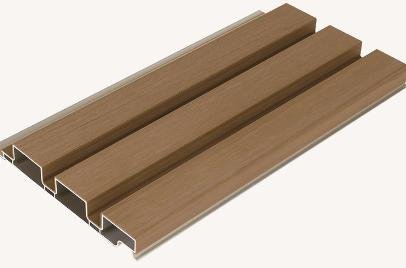
ALumverde is a new building material that combines aluminum substrates and a Surlyn resin co-extrusion layer in a perfect manner. The high-tech construction combines the durability of the 6063-T5 aluminum alloy’s mechanical strength and the protective, aesthetic benefits of Surlyn—an ionomer resin that is well known for its resistance to UV, hardness, and water resistance. The outer layer is approximately 1mm thick, providing excellent surface durability.
Specifically, our panels, such as the AC-WP18 and AC-WP19 models, feature 1.2mm/1mm aluminum/co-extrusion layer thicknesses, an overall panel width of 167mm, and are available in standard 2.9m or 5.8m lengths.
2. How composition affects fire resistance
The use of aluminum as a core material significantly enhances fire safety. With aluminum as a core material, it meets a greater degree of fireproofing rate, which is required for the majority of commercial and public buildings. Surlyn offers an extra line of defense by resisting ignition and acting as a heat barrier. Unlike some other composite panels that may rely on flammable plastics or adhesives, our material inherently resists burning and minimizes heat transfer.
Comparison with Traditional Cladding
1. Differences in ignition and flame spread
Traditional cladding materials, such as wood-plastic composites (WPC) or aluminum composite panels (ACP), often contain organic polymers that are susceptible to ignition and flame spread. In contrast, our panels have ASTM E84 Class A fire resistance certification, which means limited flame spread.
Surlyn® co-extrusion layer provides better fire rating limits compared to standard ACP/wood-plastic composites. The intrinsic non-combustibility of aluminum further stifles the possibility of flashover and provides a more fire-safe building envelope.
2. Heat resistance and structural integrity
Aluminum’s high melting point (~660°C) means it maintains its structural integrity under exposure to heat for prolonged periods. Coupled with Surlyn’s thermal barrier properties, our cladding guarantees dimensional stability in case of fire. Its super low water absorption and expansion make it the most stable material for high-rise buildings. Unlike deforming or delaminating materials subjected to thermal stress, our panels hold together to continue protecting.
Real-World Performance
1. Behavior when exposed to high temperatures
Real-world performance surpasses laboratory ratings. The advanced construction of ALumverde allows it to perform in outdoor environments where radiant heat from the sun or localized fire events would compromise inferior materials. Our proprietary blending and molding process produces 30% less heat in outdoor applications, which increases user comfort and reduces stress on structural components.
Aluminum takes up/disperses heat quickly. The co-extrusion layer takes longer to heat, whereas aluminum dissipates the heat gained faster. The two mechanisms reduce the accumulation of heat on building surfaces.
2. Smoke production and toxicity levels
While fire resistance is crucial, smoke toxicity is equally essential in ensuring that the inhabitants are protected while evacuating. Materials like WPC have a tendency to emit toxic gases upon burning. Aluminum, however, does not emit harmful smoke when burnt, and the Surlyn coating contributes minimally to the toxicity levels. Fire Resistance: ASTM E84 Class A also considers smoke development indices, which qualify that ALumverve performs within safe limits.
Building Code Compliance
1. Relevant international fire safety standards
To be lawfully used in high-rise buildings or commercial buildings, the cladding materials must meet strict building codes such as the IBC (International Building Code), NFPA codes in the U.S., and EN13501 in Europe. Fire Resistance: ASTM E84 Class A; EN 13501 (Under test) renders ALumverde already compliant with principal global standards.
2. How Alumverde panels meet regulatory requirements
Our products use structural-grade aluminum (6063-T5) that complies with ASTM B221 for extruded aluminum products. Quality assurance for our aluminum-wood composite products includes an ISO Quality Management System and performance testing for mechanical strength and thermal performance.
Practical Considerations for Use
1. Installation factors for fire safety
Installation plays a fundamental role in making sure that the fire resistance of any panel system is not violated. Our panels are designed for easy but secure mounting: Install the aluminum joist with a span of 1m. Install the panel by screwing on the edge. The concealed fastening system minimizes exposure to air gaps or combustible adhesives that could compromise safety.
Their lightweight design—half the weight of WPC cladding- can be mounted on a double wider span of structure, which also reduces pressure on support structures while maintaining structural integrity.
2. Maintenance and long-term performance
Aluminum possesses a natural protective oxide coating, which resists corrosion without requiring special treatments. The co-extruded layer, being waterproof, contributes to the performance with minimal expansion, so the fire-resistant qualities of the panel do not reduce over time. This makes them extremely compatible with coastal or humid environments where other products fail.
Also, the Surlyn resin layer imparts long-lasting color fastness and ultra protection from water and corrosion, reducing maintenance needs without sacrificing safety attributes.
Conclusion
ALumverde panels represent a new generation of aluminum cladding—designed not only for aesthetics and wood-like beauty, but also with uncompromising attention to fire safety. For architects and developers who require an upscale solution that will satisfy modern code requirements while providing natural aesthetic beauty, products like ALumverde AC-WP18 and AC-WP19 provide a perfect blend of performance and peace of mind.
FAQ
Q: Are ALumverde panels suitable for high-rise buildings?
A: Yes, our panels enjoy a greater fireproof rate standard, which is required in the majority of commercial and public structures. The structural-grade aluminum core and Class A fire rating of our panels render them ideal for high-rise applications.
Q: How does ALumverde compare in fire resistance to standard ACP or WPC panels?
A: Surlyn® co-extrusion layer provides higher fire rating limits than standard ACP/wood-plastic composites. Our panels are ASTM E84 Class A certified with improved flame spread resistance.
Q: Does the surface treatment impact the fire performance of ALumverde panels?
A: No. The co-extruded Surlyn face provides appearance and additional protection with no compromise in fire safety. It creates a barrier to ignition sources.
Q: What certifications should I be looking for when choosing aluminum wall cladding?
A: Look for ASTM E84 Class A and EN13501 fire safety ratings. Also check for compliance with ISO quality systems and conformity to structural standards like ASTM B221 for aluminum alloys—we meet all these criteria.