
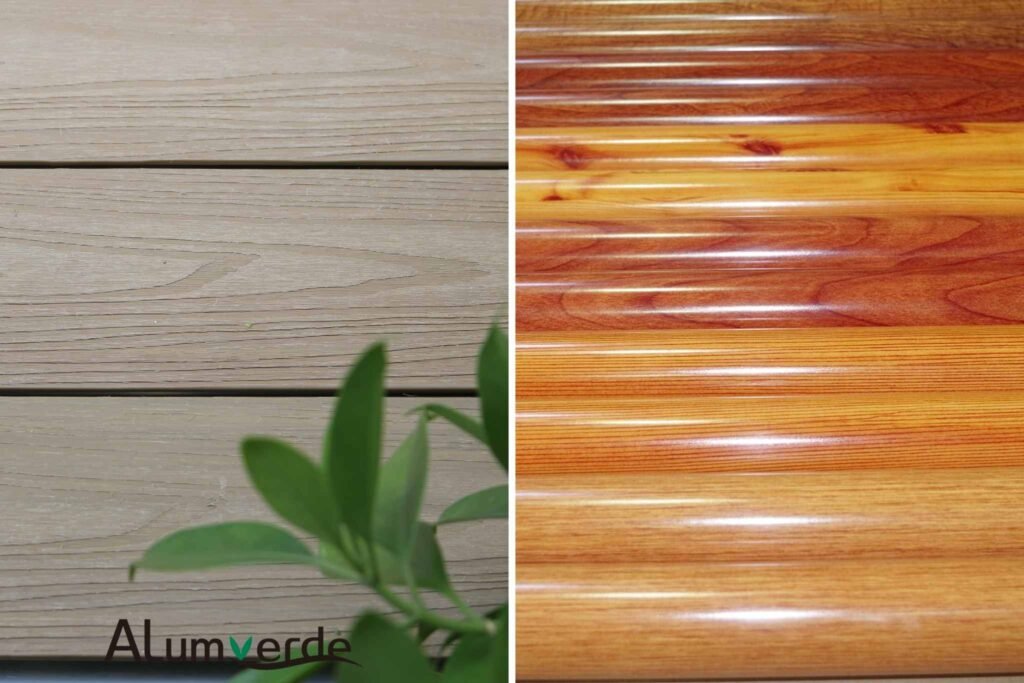
For many years, architects have struggled with a key choice: the classic, cozy look of real wood versus the sturdy, practical nature of aluminum. Natural wood brings a unique charm, yet it faces issues like decay, sun damage, and fire risks. These problems make it unsuitable for today’s buildings, especially tall ones.
To address this, the field developed powder-coated aluminum. However, it often lacks warmth and seems too artificial. Now, a fresh option has arrived: ALumverde. Using modern co-extrusion methods, it forms an aluminum-resin blend. This creates a 3D wood texture that not only resembles timber but also feels like it.
The Evolution of Aluminum Finishes: Why Texture Matters
Designers and builders now prefer finishes that feel real, not just look the part. In business-to-business projects, where strength and style must blend, the surface of an aluminum profile sets the overall quality.
Traditional Powder Coating: The “Fake” Aesthetic
Powder coating is still widely used for aluminum items, but it has clear drawbacks in terms of realism:
- Tactile Coldness: It keeps the metal’s quick heat transfer, so it feels neither too chilly nor warm when touched.
- Lack of Depth: The surface stays smooth and plain, without the natural bumps and patterns found in actual wood.
- Durability Risks: Lower-grade powder may fade, flake, or powder off with time, particularly in tough seaside or sunny spots.
ALumverde 3D Wood Texture: The Co-extrusion Revolution
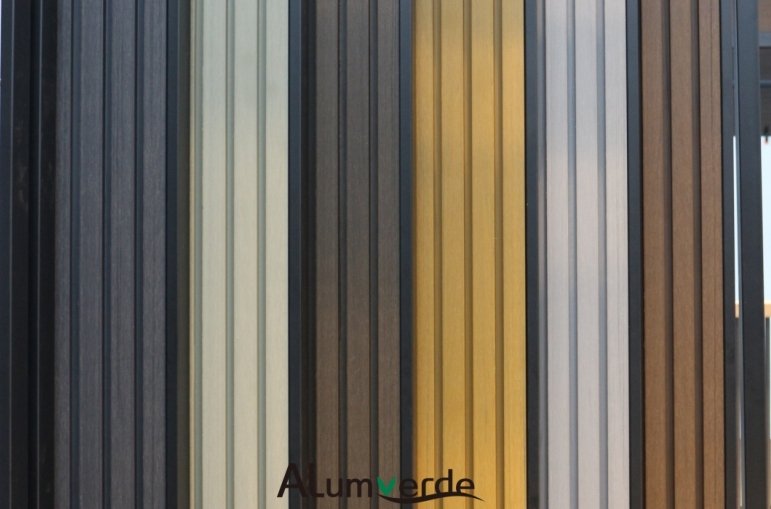
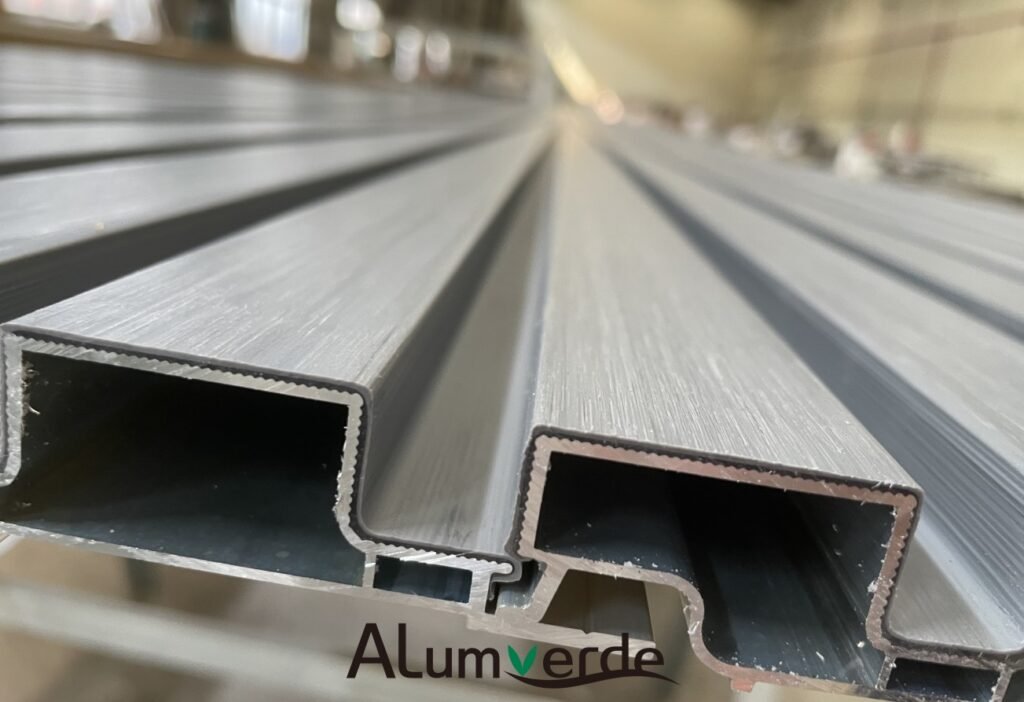
ALumverde profile applies a detailed co-extrusion technique to cover a 6063-T5 aluminum base with a tough Surlyn resin coating. This produces a better aluminum-wood mix that delivers:
- Authentic Tactile Experience: The 3D wood grain design copies the natural bumps and soft shades of true timber, removing the chilly metal touch.
- Visual Complexity: By blending base plastic and color additives carefully, ALumverde creates varied tones and light-catching lines.
- Unmatched Protection: The 1mm co-extrusion covering serves as a barrier, blocking 99% of UV rays and resisting water with no uptake.
Engineering Resilience: The Science Behind ALumverde’s High-Performance Finish
ALumverde goes beyond a simple material; it forms a complete setup built to tackle both design and build challenges in current projects.
Surlyn Resin Shield (The “Golf Ball” Technology)
The outside layer in ALumverde items uses Surlyn, a resin known for its role in golf balls because of its strong toughness and resistance to knocks.
- Problem Solved: Older coatings can split during heat changes. Surlyn stays flexible and steady, keeping the surface whole for more than 30 years.
- Performance: It forms a firm, scratch-proof layer that holds up well, and unlike powder coating, small surface damage can often be fixed by light sanding.
Advanced Heat Insulation
A main issue with aluminum decking and siding is how it holds onto heat.
- Technology: ALumverde’s unique mixing and shaping methods cut down on heat intake.
- Result: The top stays as much as 30% less warm than regular aluminum or common composites, so it’s pleasant to walk on barefoot even in strong sunlight.
Non-Combustible Aluminum Core
Safety stands at the heart of ALumverde’s build, particularly for tall buildings.
- Compliance: All items meet the ASTM E84 Class A fireproof standard.
- Advantage: Unlike wood-plastic composites (WPC) with more plant-based parts, ALumverde’s aluminum base stops fire from spreading and gives off little smoke.
Bringing Natural Aesthetics to the Sky
ALumverde’s aluminum-resin blend fits various settings where real wood would not last.
High-Rise Balconies and the LuxeFlow Decking
In tall buildings, weight control and water flow matter a great deal.
- The Product: Co-Extrusion Aluminum LuxeFlow Decking includes built-in channels for drainage.
- Application: These paths collect water from the top and direct it via a linked gutter setup to a set drain spot, so no water drips onto the levels below.
- Benefit: At half the weight of typical WPC, it eases the burden on tall structures while offering a secure, non-slip, and fire-safe surface.
Architectural Facades: Co-Extrusion Aluminum Shiplap and Slat Cladding
Current building fronts need simple lines paired with lasting performance.
- Shiplap Cladding: It suits under-eaves and side walls, giving a smooth, ongoing style with a wood-like touch.
- Slat Cladding: Drawing from even upright designs, it adds layers and elegance to business building exteriors.
- Real-World Success: In New Zealand, ALumverde cladding served well for home exterior updates in a teak shade, delivering a lasting look that handles seaside conditions.
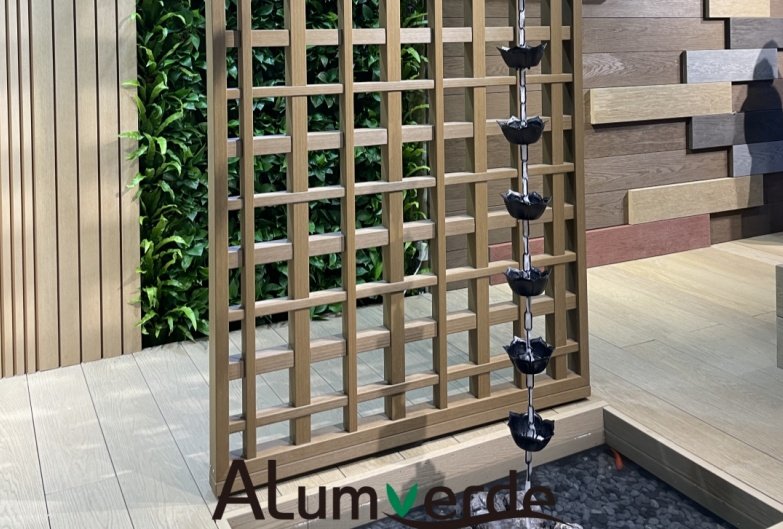
Decorative Screening and Versatile Tubes
The ALumverde Co-Extrusion Aluminum Tube Series acts as a handy choice for designers to bring their ideas to life.
- Design Flexibility: Tubes appear in square, round, and rhombus forms.
- Customized Solutions: We supply customized lengths (up to 6 meters) and customized colors to match the style for pergolas, fences, and railings.
- Stability: With very low water uptake, these tubes avoid warping or breaking as time passes, unlike many timber screens.
Why Professional Developers Choose ALumverde
ALumverde shows a focus on new ideas and care for the environment.
- Eco-Conscious: Our items use 80% recycled aluminum, cutting carbon output by 60% over new aluminum making.
- Effortless Installation: Being half the weight of like products, ALumverde fits over broader gaps, reducing work costs by up to 40%.
- Support for Professionals: We offer a wide set of ready-made parts—from hidden fasteners and supports to edge pieces—ensuring a clean, expert result each time.
Elevate your next project with the warmth of nature and the strength of metal. Contact the ALumverde team today to request a free sample or explore our range of customized finishes.
FAQ
Q: Is ALumverde the same as Aluminum Composite Panels (ACP)?
A: No. Unlike ACP or ACM, which act like layered panels, ALumverde forms an aluminum-resin blend. In this setup, a firm aluminum core gets covered by a strong co-extruded layer. That layer gives it a 3D wood texture.
Q: How does the fire resistance of aluminum-resin composites compare to WPC?
A: ALumverde provides much better fire safety. WPC tends to fall short on fire tests. Yet, our aluminum core delivers a Class A rating under ASTM E84. This meets strict rules for tall buildings and public business sites.
Q: Can these wood-looking aluminum materials really reduce building energy costs?
A: Yes. Items like ALumverde include solid heat barrier tech. This keeps the tops 30% cooler than basic aluminum. As a result, less heat enters the structure. Cooling needs drop, too.
Q: How do co-extruded aluminum products handle extreme UV exposure?
A: The Surlyn resin in co-extrusion works as a UV barrier. It blocks 99% of rays. Therefore, it stops color loss and chalky buildup often found in old powder coatings. Colors stay true over many years.